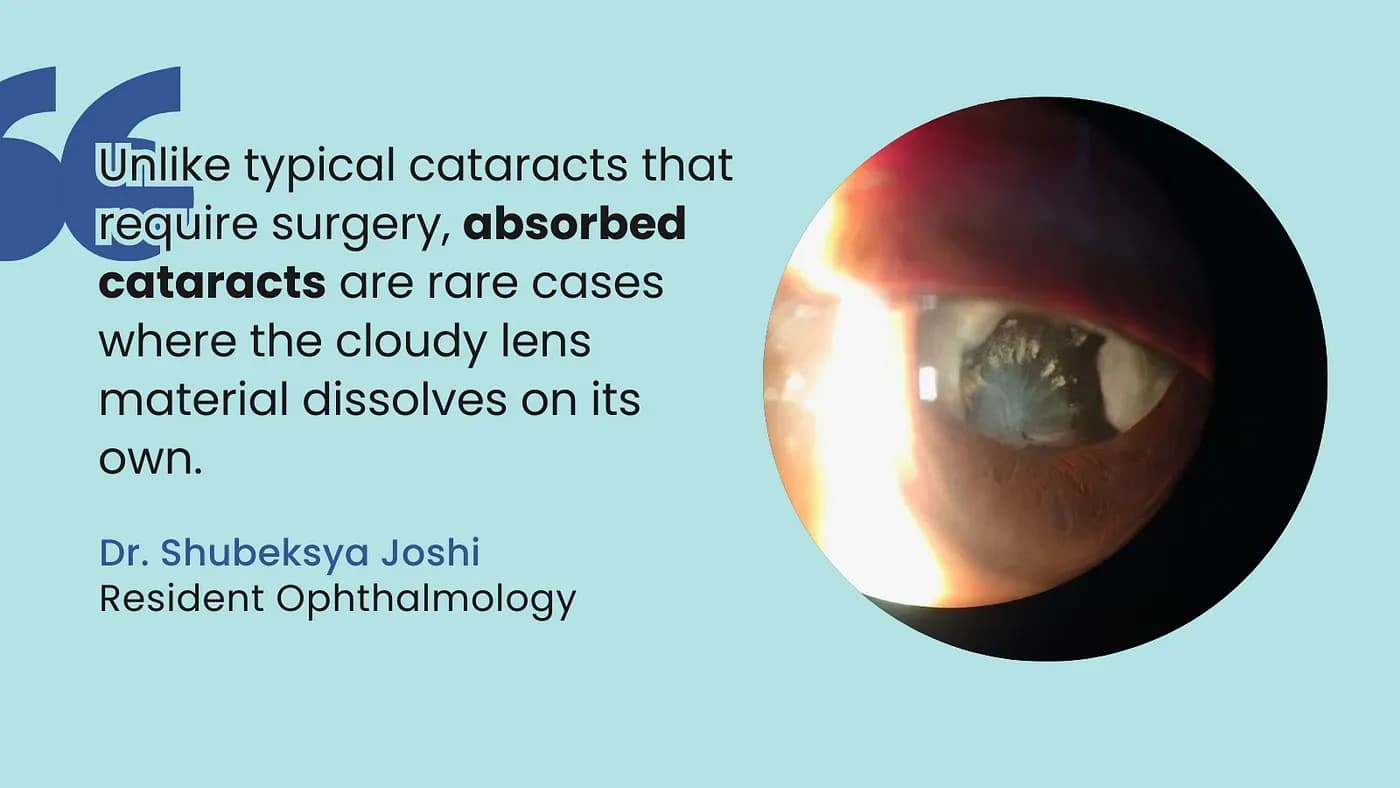
Cataracts are a common eye disorder in which the normally clear lens becomes hazy, resulting in blurred vision. Most people undergo surgery to remove cataracts and restore clear vision. But what if the clouds simply disappeared?
This is a fascinating case of absorbed cataracts, a rare condition in which the hazy lens material in the eye dissolves spontaneously. While uncommon, absorbed cataracts can develop on their own or as a result of other eye disorders.
The Mystery of Absorption
Doctors are still unsure of the actual explanation for cataract absorption. However, the current thinking says that enzymes within the eye are responsible for breaking down the hazy substance, allowing it to disperse.
Potential Links to Underlying Eye Conditions
While some absorbed cataracts occur unexpectedly, others may be associated with pre-existing eye conditions. This includes:
- Maternal rubella is a viral infection that might affect the baby’s developing eyes.
- Leptospirosis is a bacterial infection transmitted through contaminated water or soil.
- Uveitis is inflammation inside the eye.
- Persistent Hyperplastic Primary Vitreous (PHPV) is an uncommon congenital eye disorder.
- Hallerman-Streif-Francois Syndrome is a genetic disorder that affects many body parts, including the eyes.
- Down Syndrome is a hereditary disease that causes physical and intellectual problems.
Surgical Management: A Challenge and an Opportunity
Because of the disturbed structure of the absorbed lens, treatment for these cataracts may be more complicated than typical cataract surgeries. However, advances in surgical procedures and instruments provide renewed hope. Today, ophthalmologists are better equipped to operate on absorbed cataracts, potentially restoring patients’ vision.
A Fascinating Phenomenon with Hope for the Future
Absorbed cataracts are a fascinating, yet uncommon, eye condition. While the science behind their absorption remains under investigation, it’s crucial to see an eye doctor for proper diagnosis and treatment if you experience vision changes. With ongoing research and advancements in surgical techniques, the future looks promising for those experiencing vision loss due to absorbed cataracts.